People treat the internet like a mall. They walk in with a mood. They look for a doorway that matches it.
Entertainment platforms sell stories. They offer films, series, music, clips, and fandom. The user pays with time, attention, and often a subscription.
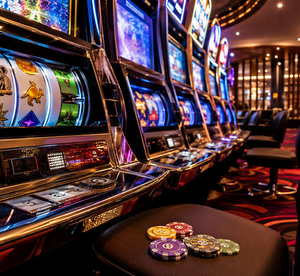
Gambling platforms sell outcomes. They offer wagers, spins, and live odds. The user pays with money, attention, and emotion.
Both compete for the same scarce resource: free hours. Both use similar tools: push alerts, streaks, “recommended for you,” and social proof. But users choose between them for different reasons.
This article explains that choice in plain terms. It breaks down what pulls people in, what keeps them there, and what makes them switch. You will see the decision like a map, not a mystery.
The Core Motivation: Story Consumption Vs Outcome Anticipation
Entertainment platforms run on absorption. The user wants to disappear for a while. A film, a series, or a clip creates a tunnel. Time passes quietly. The reward comes at the end of the episode or scene.
Gambling platforms run on anticipation. The user stays alert. Every second matters. The reward does not wait. It can arrive on the next card, spin, or round.
This difference shapes behavior.
On entertainment sites, users binge. They stack episodes. They postpone sleep. The brain stays calm. Dopamine flows slowly, like a drip.
On gambling platforms, users hover. They watch the screen closely. They react fast. Dopamine spikes and drops in sharp waves.
That is why many users do not see these platforms as opposites. They see them as modes. One for winding down. One for feeling sharp and present.
In India, this overlap shows clearly in real-time formats. Live-dealer games borrow the visual language of entertainment—faces, voices, pacing—while keeping the tension of a wager. A live casino in india fits this middle ground well, because it feels less abstract than pure numbers and odds, yet more interactive than passive viewing.
For many users, the choice is not “movies or gambling.” It is “do I want a story to carry me, or do I want a moment to resolve right now?”
Time Investment: Passive Hours Vs Focused Sessions
Entertainment platforms stretch time. One click becomes three hours. Autoplay does the work. The user leans back and lets the platform decide what comes next.
This suits long, unbroken blocks. Evenings. Weekends. Late nights. The cost feels low because the clock fades into the background.
Gambling platforms compress time. Sessions stay shorter but denser. Ten minutes can feel like an event. Each action demands attention. Each pause feels loud.
This makes gambling easier to fit into gaps. A break between tasks. A commute. A quiet hour before sleep. The user enters with intent and exits with a clear end point.
Users choose based on how much time they can surrender.
When time feels abundant, entertainment wins. When time feels scarce but energy runs high, gambling becomes attractive. Not because it is better, but because it fits the shape of the moment.
This is why many users switch between platforms in the same day. Long-form content for the evening. Short, high-focus sessions when time feels tight.
The decision is practical, not philosophical. People match the platform to the container of time they have available.
Emotional Payoff: Comfort Loops Vs Risk Loops
Entertainment platforms reward familiarity. The user returns to known genres, actors, and formats. Comfort grows with repetition. Even suspense feels safe because the stakes stay fictional.
The emotional arc is wide but soft. Tension builds slowly. Resolution comes predictably. The platform trains the user to expect emotional closure.
Gambling platforms reward uncertainty. Every outcome stays open until the last second. The brain tracks probability, not plot. Wins feel sharp. Losses feel immediate.
This creates a tighter loop. Action. Result. Reaction. Repeat.
Users choose based on the emotion they need.
When they want stability, they choose entertainment. When they want intensity, they choose gambling. Neither replaces the other. They serve different emotional tasks.
Some users avoid gambling during stress because uncertainty feels heavy. Others seek it for the same reason, because risk cuts through mental noise.
This explains why the same person can see one platform as relaxing and the other as exhausting—then switch that judgment a week later.
The payoff is not money or content alone. It is how the platform makes the user feel during and after the session.
Control And Agency: Watching Decisions Vs Making Them
Entertainment platforms limit control by design. The user chooses what to watch, then surrenders the wheel. The story moves forward without input. Even “interactive” features rarely change outcomes in a meaningful way.
This lack of control is the appeal. The user rests. Someone else makes the decisions.
Gambling platforms do the opposite. They demand choice. When to place a bet. How much to risk. When to stop. Even games of chance require timing and restraint.
This creates a sense of agency. The user feels involved, not carried.
People choose based on how much control they want to hold.
After a day full of decisions, entertainment feels light. After a day of routine, gambling can feel engaging because it restores the feeling of influence, even in small ways.
The difference is subtle but important. One platform says, “Watch this.” The other asks, “What will you do?”
Users drift toward the option that balances their mental load at that moment.
Social Signals: Shared Culture Vs Private Play
Entertainment platforms thrive on shared reference points. Popular shows, scenes, and quotes travel fast. They show up in group chats, memes, and office talk. Watching becomes a social act, even when done alone.
Users often choose content because others have seen it. Being “out of the loop” feels uncomfortable. Platforms amplify this with trending lists and top charts.
Gambling platforms send quieter signals. Play usually stays private. Wins may be shared. Losses rarely are. There is no common script everyone follows at the same time.
Social pressure works differently here. Instead of trends, users react to availability. Live events. Limited-time tables. Active dealers. The sense that something is happening now.
This creates two distinct pulls.
Entertainment says, “Everyone is watching this.”
Gambling says, “This is live right now.”
Users pick based on whether they want connection or separation. Some nights call for shared culture. Others call for solitary focus.
Neither choice is accidental. It reflects how visible the user wants their time online to be.
Friction And Access: Low Commitment Vs Instant Entry
Entertainment platforms build soft gates. Sign-ups feel light. Trials feel safe. Many users can browse before they commit. The cost sits in the background and renews quietly.
This lowers friction. Entry feels reversible.
Gambling platforms reduce steps in a different way. They focus on speed. Fast registration. One-click deposits. Immediate play. The barrier is not complexity but consequence.
Users notice this difference fast.
When they want a low-pressure start, they choose entertainment. When they want immediate engagement, they choose gambling. The platform that wins is the one that matches the user’s tolerance for commitment at that moment.
This also explains platform switching. A user may browse entertainment sites for twenty minutes, feel restless, then move to a gambling platform for a short, decisive session.
The choice often hinges on one question:
“Do I want to ease in, or do I want to start now?”
Why Users Switch Between Both Instead Of Choosing One
Most users do not pledge loyalty. They rotate.
Entertainment and gambling platforms solve different problems at different hours. The same person may binge a series at night and place a short wager the next morning. This is not contradiction. It is scheduling.
Switching happens when a platform stops matching the user’s state.
If entertainment feels slow, the user looks for tension.
If gambling feels heavy, the user looks for comfort.
The trigger is often subtle. Fatigue. Boredom. The need for a clear end. Or the need to forget time exists.
Platforms compete, but they also hand users to each other. One drains energy. The other refocuses it. Users learn this pattern quickly, even if they never name it.
This is why attempts to frame the choice as moral or binary fail. Users do not ask, “Which is better?” They ask, “What fits right now?”
Understanding that question explains almost every click that follows.
Choice Follows State, Not Category
Users do not sort platforms by labels. They sort them by state of mind.
Entertainment platforms win when people want ease, continuity, and shared stories. Gambling platforms win when people want focus, tension, and fast resolution. The decision shifts hour by hour.
This is why both ecosystems keep growing. They do not replace each other. They trade users back and forth as moods change.
The winning platform is rarely the loudest or the most generous. It is the one that arrives at the right moment and asks the right amount from the user.
Time, attention, emotion, and control are the real currencies online. Platforms that understand how people spend those currencies will always earn a place in the daily routine.