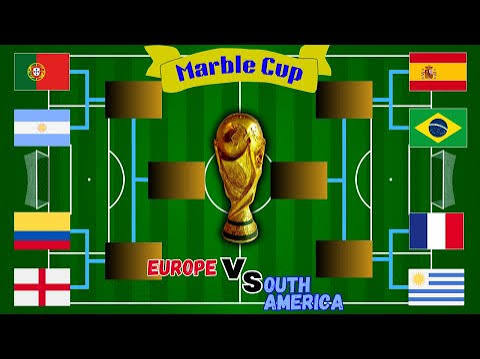
The World Cup has been dominated by just two continents, and the battle between Europe and South America is closer than many casual viewers realise when they only glance at a list of champions. When you watch full tournaments, the contrast is not just in how many titles each continent has, but in the different tactical identities, match rhythms, and psychological profiles that those champions bring to the pitch.
Who leads in World Cup titles, and why does that matter?
As of the 2022 World Cup, European nations have won 12 men’s World Cup titles, while South American nations have won 10. Those 22 trophies are shared among just eight countries, all from UEFA and CONMEBOL, with Brazil, Germany, and Italy leading the honours list. For viewers, this means that when you watch a knockout match involving a traditional power from either continent, you are usually seeing a team carrying decades of stylistic and psychological heritage, not just a set of players in one-off form.
How European champions typically look over a full tournament
European winners such as Italy, Germany, France, Spain, and England have often built their success on structured team play, deep tournament squads, and adaptability across different game states. Over full campaigns, you tend to see compact defensive blocks, strong set-piece routines, and midfields designed to control tempo rather than rely purely on individual stars. When you watch their matches from group stage to final, their tactical evolution—shape tweaks, role changes, and game-management choices—usually reflects the depth of their domestic coaching cultures and club-level tactics.
How South American champions present themselves when you watch closely
South American winners—Brazil, Argentina, and Uruguay—combine high technical skill with more visible emotional swings, but underneath that spectacle lies clear tactical structure. Brazil’s best sides have balanced expressive attacking play with disciplined defensive shapes, while Argentina and Uruguay often pair intense collective work with moments of individual genius. For viewers, the key is to look past the flair: when these teams win tournaments, they usually show strong control of central zones, ruthless transitions, and an ability to survive chaotic phases without losing their overall identity.
What to watch for in intercontinental finals and knockouts (ดูบอลสด)
When you ดูบอลสด of a Europe–South America clash in knockouts or a final, you are often watching decades of rivalry compressed into 90 minutes. These matches tend to feature tight margins, with Europe historically edging the head-to-head record in finals but South America winning enough to keep the balance close. To read these games properly ดูบอลสดคืนนี้ โกลแดดดี้ , focus on how each side handles pressure moments: do European teams maintain their structure under emotional swings, and do South American teams manage to impose their technical combination play when the tempo rises and transitions stretch the pitch?
Title distribution table: Europe vs South America at a glance
Even before you get into tactics, it helps to fix the basic title numbers and which nations contribute to them. This gives context every time you see a traditional giant on screen, especially when broadcasters talk about “adding another star” to the shirt.
| Continent | Total titles (to 2022) | Nations with titles and their counts |
| South America | 10 | Brazil 5, Argentina 3, Uruguay 2 |
| Europe | 12 | Germany 4, Italy 4, France 2, England 1, Spain 1 |
| Other continents | 0 | No champions from Africa, Asia, North America, or Oceania yet |
Knowing this breakdown helps you understand why many intercontinental games are framed as storyline-heavy: Europe defending its lead, South America trying to close the gap, and everyone else chasing a first breakthrough.
Why European depth often shows across full tournaments
One reason Europe edges the title count is the number of genuinely competitive nations they can send to a World Cup, with multiple teams capable of reaching semi-finals in the same edition. When you watch the tournament round by round, this depth shows up in all-European knockouts that feel like mini-finals, and in their ability to rotate squads without sharp drops in tactical cohesion. That density of high-level teams increases the chance that at least one European side will navigate the bracket successfully, even in years when traditional powers struggle.
Why South America still punches above its numerical weight
South America has fewer participating nations but a high concentration of elite programmes, which makes their 10 titles impressive relative to the size of the confederation. Brazil and Argentina, in particular, often carry both the technical level and mental expectation to manage long tournaments, while Uruguay’s early successes built a deep historical aura despite their smaller population. For viewers, this means that when any of these teams reach the knockouts, their historical threat level is higher than their raw numbers in the draw might suggest.
How style and context can mislead casual viewers about “dominance”
Because European champions have won several recent tournaments, it is easy to assume a permanent tactical superiority, but historical data shows a more balanced rivalry. Finals between the continents have produced wins for both sides, and all-time head-to-head records in World Cup matches show Europe with a lead but not a landslide. When you watch modern tournaments, it is worth asking whether a period of European success stems from tactical trends (pressing, positional play) that South American sides will eventually absorb and adapt to, just as Europe previously adapted to South American innovations.
Summary
Up to 2022, European nations hold a narrow lead in World Cup titles, 12 to South America’s 10, but both continents have shaped how we watch and understand the tournament far more than those two numbers alone suggest. European champions tend to showcase depth, structure, and long-tournament adaptability, while South American winners combine high technical skill with strong identities that survive chaotic match phases. When you watch future World Cups, focusing on how teams from these two continents manage space, tempo, and pressure will tell you more about “dominance” than any simple count of stars above the badge.